
blog
Journey with Jacqueline
Welcome! This is the start of new possibilities. In this blog, you will find my thoughts, hear my heart and encouragement to inspire your faith. Explore some of these insightful articles to encourage your own journey.
God Bless You!
Jacqueline,
Quarrie Coaching
God Bless You!
Jacqueline,
Quarrie Coaching
Feed my Sheep
The Heart of a Shepherd

The Prodigal
The Homecoming
The Prodigal
Luke 15:11-32 “For whosoever exalts himself shall be abased, and he that humbles himself shall be exalted.”
(Luke 14:11) Have you ever returned from a long journey only to hear someone say, “The prodigal has returned”?
The parable of the Prodigal Son tells the story of two brothers. One leaves home, wastes his inheritance, and returns broken. The other stays home, working faithfully with his father. When the younger son comes home, the father runs to him, embraces him, and kisses him.
Some time ago, I set out on my own journey. I wasn’t angry at God, nor did I plan to waste money. I simply wanted to know God more deeply and position myself for His call on my life.
As a widow, I felt increasingly isolated as my two girls grew older. I had all the material things I needed, yet there was a deep void inside. I often thought of the ten lepers and asked myself, “Why do we sit here until we die?” Although I had done well despite my losses, I no longer fit in with organized religion. I had stayed outside the camp for too long and had almost no fellowship with the body of Christ.
When I finally returned, I was greeted with the words, “The prodigal has returned.”
I’m sure when the younger son left home, his inheritance bought him many friends and exciting experiences. But as his money ran out, so did his friends. Meanwhile, the older brother stayed home, working hard to please his father. He kept his head down, focused on duty, never taking time to enjoy life or celebrate with friends. He lived in the inheritance but never truly saw it as his own.
Eventually, the younger brother lost everything and headed home. His father, who had been watching and longing for him, saw him from a distance. He ran to meet him, embraced him, put a ring on his finger, and fully restored him.
When the older brother returned from the fields, he heard music and celebration. The party was in full swing — it was as if the younger son had never left. Even some of the older brother’s friends had joined in.
The older brother became angry. “All these years I’ve been here working hard for you,” he said. “I’ve never had a party. But as soon as this son of yours returns after wasting your money on wild living, you throw him a feast!”
His response revealed a self-righteous heart. He pointed out his younger brother’s faults and declared him unworthy of celebration. “I’ve been faithful all this time and never received anything like this!”
The younger brother humbled himself, asked for forgiveness, and received his father’s blessing.
The father reassured the older son that everything he had was already his. He had been secure under his care the whole time. Then the father immediately forgave the younger son — no hoops to jump through, no conditions to meet.
As the party continued into the night, the question remained: Who was truly the prodigal?
We face this same scenario every day. We are either the younger brother or the older brother. Even though the younger son didn’t “deserve” the robe, the ring, the shoes, or the fatted calf, the father paid a great price to restore him.
Will you celebrate the Father’s mercy, or will you keep others in bondage through anger, bitterness, and judgment?
If you have run away from the Father, come home. Humble yourself and repent. His arms are wide open. Let Him run to you, fall on your neck, embrace you, and kiss you. Don’t miss the greatest gift ever — the Father’s love!
If you are the older brother, repent. Learn to enjoy the provisions and inheritance that are already yours. Remember that forgiveness is the greatest gift God has given to mankind.
Come home — the Father is waiting.
Feed My Sheep
Mark 16:15 “And He said to them, ‘Go into all the world and preach the gospel to every creature.’”
We are called to go into all the world and preach the gospel. But what does that actually look like for you and me?
As a child, this message was preached often in church. Today, it feels like a much greater challenge.
Recently, as I walked through the doors of the grocery store, I heard Christmas carols playing. The closer I got, the louder “Santa Claus is Coming to Town” became. Without thinking, I started humming along. The man walking in front of me slowed down and listened. We shared a little laugh, but something didn’t sit right with me.
Santa Claus is not coming to town — and he is not my message.
In that moment, I realized I had just declared something I didn’t believe in. I would probably never see this man again. What if he died that night and slipped into eternity without knowing Jesus? The weight of the Great Commission hit me hard.
thought about the mission classes I had taken and the call to present the gospel.
Jesus — not Santa — is the only reason for the season. The Kingdom of Christ has come to earth. Does this man know what it means to be a citizen of heaven? Our world is filled with chaos and deception. As citizens of heaven, we are called to be visible. Jesus said in Matthew 5:16, “Let your light so shine before men, that they may see your good works and glorify your Father which is in heaven.”
Now is not the time to hold back.
The time is coming — and is already here — when the church will face persecution, not just overseas in places like Africa and China, but right here at home. We must decide now how we will respond.
Matthew 11:12 (AMP) tells us, “From the days of John the Baptist until now the kingdom of heaven suffers violent assault, and violent men seize it by force [as a precious prize].” This means we must seek first the Kingdom of God.
Is fear what stops so many of us from stepping out and fulfilling the Great Commission? Are we afraid?
We are all called to make disciples and follow Christ. We must prepare our message. Can you see yourself as one who is sent?
I encourage you to find someone in Scripture whose calling resonates with yours — someone God has placed on your heart. Study their story. Write down the ways their calling mirrors your own. Then ask: How will I accomplish this mission?
Take Peter, for example. After denying Jesus three times, the risen Lord restored him with these words:
“Simon, son of Jonas, do you love Me more than these?” Peter answered, “Yes, Lord; You know that I love You.”
Jesus said to him, “Feed My lambs.” Jesus asked him a second and third time, and each time the response was the same: “Feed My sheep.”
Jesus wasn’t doubting Peter’s love. He knew Peter loved Him. But Jesus was preparing to leave the earth, and Peter would now need to lead. After his painful denial, Peter likely felt deep shame and depression. How could he face the crowd again after denying the One he loved?
Jesus gave Peter a powerful way forward: “If you love Me, feed My sheep.”
You and I don’t need more love than we already have. Jesus poured out all the love we will ever need on the cross. He left nothing behind. The question is not whether you have love — it’s whether you believe it and will exercise it.
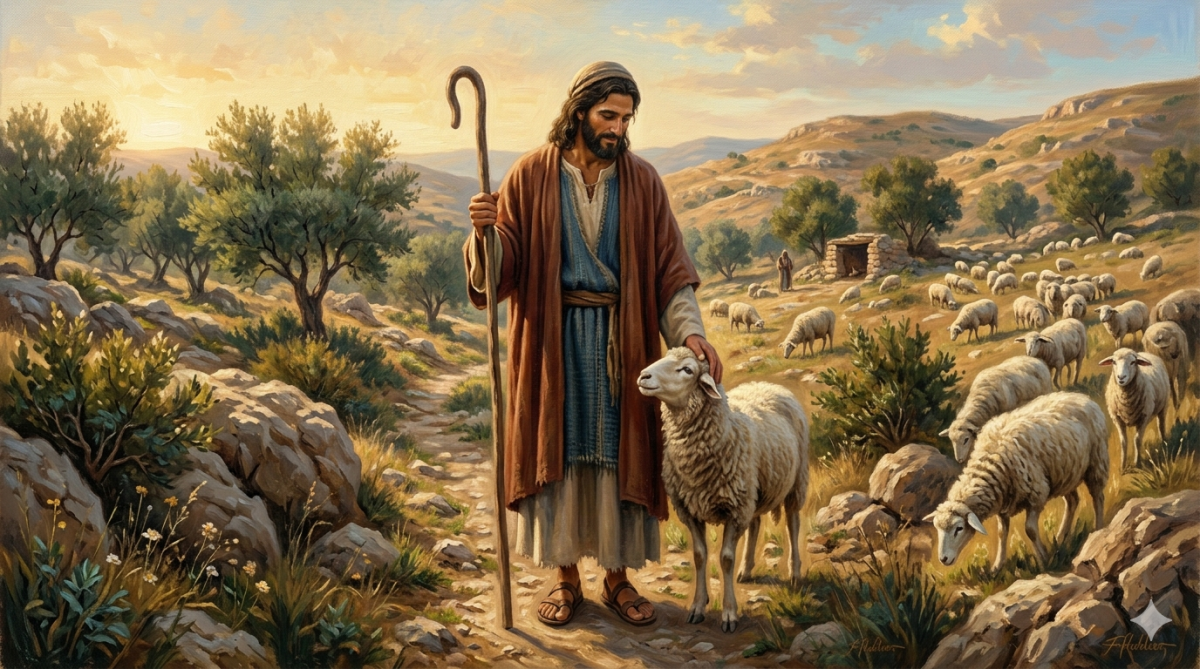
If you love Me, feed My sheep. We cannot feed the sheep from our couches. We must go out to where they are and bring them in. Jesus used the picture of sheep because some of us would rather stay comfortable. But Jesus is the Good Shepherd, and He calls us to follow His example.
In Luke 15:4, we see that Jesus came looking for the lost sheep — you and me. He is not asking us to do anything He has not already done.
John 15:16 reminds us: “You have not chosen Me, but I have chosen you…”
So hear His words personally:
“Jacqueline, if you really love Me, feed My sheep.”
“Sue, if you really love Me, feed My sheep.”
“Bob, if you really love Me, feed My sheep.”
What will it take for our light to shine so brightly that there is no question whose we are?

Remember
Dear brothers and sisters,
This morning I woke up early and, as I read and prayed, I couldn’t help but remember some things from our younger years as Christians.
I remember the zeal I had to get baptized. I was so eager because I didn’t want Jesus to return and find me not yet baptized. I remember the burning desire to witness—to share the love of Jesus and tell people they needed Him, because without Him they could not go to heaven. There were the singing trips. Not only were others blessed, but I was deeply blessed too, often coming home with tears streaming down my cheeks after being in the presence of God.
I remember the altar calls at church, where people would kneel and pray—whether to accept Jesus as Lord and Savior or to intercede for people they didn’t even know.
I remember when you could give an offering with full confidence that it would help people in the church, without worrying that it would be spent foolishly. I remember the hunger I had to be filled with the Holy Spirit. I was so desperate to speak in tongues—what an incredible experience that was!
I remember our family prayer times, including the ones Danny led when Mom and Dad were out shopping. I used to wonder how he knew we weren’t all there when his eyes were closed (I understand now).
I remember powerful sermons on heaven and hell, and messages about the Cross and the Switchblade. I remember our youth services, including one particular night when a skit was being performed. Suddenly, there was a loud noise and commotion in the back. Several leaders had dressed as police officers and “arrested” the Christians for their faith in God. The point was clear: How far will you go for Jesus?
We don’t hear that challenge often today, yet every day, people are dying for their faith in Christ. Some are being severely tortured. As I reflected on these memories, I couldn’t help but think about the state of Christianity today. Have we lost our first love? Could we really give up everything for the sake of the gospel of Jesus Christ?
Do we still mean the words we used to sing: “All to Jesus I surrender… I’ll go where You want me to go, dear Lord”?
Could you endure being badly beaten for days because of your faith? Would you stand firm, or would you give in and even betray a brother or sister to go free?
I used to struggle to understand the church in Ephesus. They seemed to have so much right, yet Jesus said, “I have this against you, that you have left your first love.”
This morning, in the early hours, I finally got it. The passion and zeal we had when we first came to Christ is what will carry us through to the end. We must be willing to lay it all down—even unto death.
Do you remember saying, “I die for You, Jesus,” when you first came into a relationship with Him? I do. It is that same zeal and passion I must run with if I am to endure to the end. We are living in the last days. Stand firm and see the salvation of our God. Be inspired. Read Revelation 2:1-6.

Something Fishy
I’m not entirely sure why I suddenly wanted to buy a fish. We’d had fish before, and they never lasted long. I hated cleaning the tank or bowl, and that lingering fishy smell wasn’t exactly pleasant. But from the start, I sensed this little creature would teach me something deeper—a life application I couldn’t ignore.
My betta was beautiful, like most bettas are. They glide through the water with flowing tails and fins, bursting with brilliant colour. Mine was bright red, so naturally, I named him Red. (The girls added Oxygen and Radish, so he had three names total.)
When I brought him home, he came in a simple vase—perfect for one betta. He seemed happy and healthy, so I decided to upgrade. I bought a stunning, elegantly shaped bowl, fancy rocks, and a plastic plant. I probably spent about $50 on accessories and supplies. I carefully transferred Red to his new home, and he looked even more striking. Everything seemed fine.
My betta was beautiful, like most bettas are. They glide through the water with flowing tails and fins, bursting with brilliant colour. Mine was bright red, so naturally, I named him Red. (The girls added Oxygen and Radish, so he had three names total.)
When I brought him home, he came in a simple vase—perfect for one betta. He seemed happy and healthy, so I decided to upgrade. I bought a stunning, elegantly shaped bowl, fancy rocks, and a plastic plant. I probably spent about $50 on accessories and supplies. I carefully transferred Red to his new home, and he looked even more striking. Everything seemed fine.
Then I went away for the weekend and left the kids in charge. They’d cared for fish before without issues, so no worries. But this time, I forgot one crucial instruction: feed the fish. To me, it was obvious—morning and evening, every day, just 2–4 pellets total. Bettas need very little to survive.
I’d even moved the bowl to a high-traffic spot: right where you’d pass going up or down the stairs. In the past, whoever fed the dog in the morning fed the fish, and the evening shift rotated. The odds of at least one feeding per day were high.
When I got home, I hugged the girls—everything seemed normal—until I asked, “Did anyone feed the fish this weekend?”
Silence. Not this weekend. Red hadn’t been fed at all.
Over the next week, I tried everything to nurse him back. I knew not to overfeed after such a long fast. Some days, he rallied—bursts of energy that surprised us, strong swims that gave hope. But even tiny amounts of food made his belly swell, trapping air and making it hard for him to surface. In the end, Red didn’t make it.
Now, I’m using my fish as a metaphor for what happens far too often in “Christian” circles. What kind of environment are you swimming in? No different from Red, you can be in the nicest building—glass walls, stone architecture, plush seats—but if you’re not getting fed spiritually, you will starve. Some believers drift away, even die spiritually, without realising they were malnourished. They were content with fancy preachers tickling their ears—messages that brought occasional bursts of energy, laughter, and feel-good moments. But it wasn’t real nourishment.
When trials hit, they were too thin to fight, lacking the skills and strength to stand. Decay set in. Without help, it was only a matter of time.
Well-meaning onlookers talk about them as if they’re invisible—gossip disguised as concern. 2 Corinthians 12:20–21 (NIV) warns against this: “For I am afraid that when I come I may not find you as I want you to be… I fear that there may be discord, jealousy, fits of rage, selfish ambition, slander, gossip, arrogance and disorder. I am afraid that… I will be grieved over many who have sinned earlier and have not repented…”
Gossip kills churches. It’s not effective for the body of Christ. The walls close in—you hadn’t noticed them before, but now you’re contained.
The fisherman reeled them in with shiny lines of deception and tasty bait. They didn’t question who was feeding them or what they were eating. They trusted because the “skilled men” looked the part. So used to spiritual junk food, when the real truth came, they couldn’t digest it. Their bellies swelled with emptiness, and they could no longer surface for fresh air.
Are you a fish in safe waters? Whether you’re the fish or the fisherman, there’s bait involved. What—and where—are you eating? Where are you swimming, and with what school? When did you last get fresh water?
Maybe you’ve made it through rough waters. You say, “I’m the fisherman now!” What results are you seeing?
When Jesus fished, He got real results. He didn’t just catch people—He trained them to become fishers of men. They laid down their lives to follow Him. His powerful message: “Repent, for the kingdom of heaven has come near” (Matthew 4:17 NIV). And the impact? “Jesus went throughout Galilee, teaching in their synagogues, proclaiming the good news of the kingdom, and healing every disease and sickness among the people. News about him spread all over Syria, and people brought to him all who were ill with various diseases, those suffering severe pain, the demon-possessed, those having seizures, and the paralysed; and he healed them” (Matthew 4:23–24 NIV, paraphrased from context).
Fishers of men: What are you preaching? What impact is it having? Are you seeing lives transformed, healed, set free? Or are the “fish” around you dying?
Let’s make sure we’re feeding on the real thing—and feeding others the same. No more fancy bowls without food. No more starvation in beautiful surroundings. The kingdom is near—let’s fish as Jesus did.

Trial by Fire
Fires can serve good purposes or bring terrible destruction. We light them to burn garbage, clear land, or purify materials. But unchecked, they devour possessions, homes, and even lives.
There’s one fire, however, that should never surprise us as believers.
In 1 Peter 4:12–13 (NIV), Scripture says: “Dear friends, do not be surprised at the fiery ordeal that has come on you to test you, as though something strange were happening to you. But rejoice since you participate in the sufferings of Christ, so that you may be overjoyed when his glory is revealed.”
The word here for “overjoyed” (or “exultation” in some translations) means to rejoice triumphantly. God desires to baptize us with His Holy Spirit and fire—not just warm feelings, laughter, and a quick trip home, but a genuine refining by fire.
1 Corinthians 3:13–15 (NIV) explains this clearly: “…their work will be shown for what it is, because the Day will bring it to light.
It will be revealed with fire, and the fire will test the quality of each person’s work. If what has been built survives, the builder will receive a reward. If it is burned up, the builder will suffer loss but yet will be saved—even though only as one escaping through the flames.”
There’s one fire, however, that should never surprise us as believers.
In 1 Peter 4:12–13 (NIV), Scripture says: “Dear friends, do not be surprised at the fiery ordeal that has come on you to test you, as though something strange were happening to you. But rejoice since you participate in the sufferings of Christ, so that you may be overjoyed when his glory is revealed.”
The word here for “overjoyed” (or “exultation” in some translations) means to rejoice triumphantly. God desires to baptize us with His Holy Spirit and fire—not just warm feelings, laughter, and a quick trip home, but a genuine refining by fire.
1 Corinthians 3:13–15 (NIV) explains this clearly: “…their work will be shown for what it is, because the Day will bring it to light.
It will be revealed with fire, and the fire will test the quality of each person’s work. If what has been built survives, the builder will receive a reward. If it is burned up, the builder will suffer loss but yet will be saved—even though only as one escaping through the flames.”
No one can lay any foundation other than Jesus Christ. Everything we build on that foundation—our works, motives, and character—will face the test of fire. Some things burn quickly (wood, hay, straw); others endure (gold, silver, precious stones). You have to come through the fire.
A real fire often starts small—a single spark—then spreads uncontrollably. Some areas ignite fast and are gone in moments; others smolder longer until fully consumed. Wood chips flare up instantly, twigs take a bit more time, and thick logs burn slowly but thoroughly.
Trials and calamities work the same way. They reveal and test our true character. Last year, I prayed to know the God of Shadrach, Meshach, and Abednego—the God who shows up powerfully in the furnace. I’m sure many Christians have prayed something similar: “Lord, where is the God of Shadrach, Meshach, and Abednego today?”
The answer? He hasn’t moved. We’re the ones who pull back when we feel the heat, hear the crackle, and sense the flames closing in.
(For the full story, read Daniel 3.)
King Nebuchadnezzar set up a massive golden image and commanded everyone to bow down and worship it—or face a blazing furnace. Shadrach, Meshach, and Abednego refused. They would not bow to any idol, declaring that their God was able to deliver them—and even if He didn’t, they still wouldn’t serve false gods. They were thrown into the furnace, heated to seven times the usual temperature. Yet when the king looked in, he saw four men walking unharmed in the flames—the three Hebrews and a fourth who looked like “a son of the gods.” God spared their lives because they refused to bow to graven images.
Today, many people still erect “golden images” on the altars of their lives—money, status, comfort, approval, or modern idols no different from the silver, gold, bronze, iron, wood, and stone gods condemned in Daniel 5.
What will you do when the fire starts burning around you? Will you be consumed like unprepared bystanders (the Chaldeans—wise men and astrologers—who got too close without true faith)? Or will you stand firm?
(Note: 1 Peter 3:3–7 speaks to inner beauty and a gentle, quiet spirit of great worth to God—perhaps a reminder that true strength in trials comes from an inner life anchored in Him, not outward show.)
Only when our faith has been tested and refined by fire can we boldly declare God’s Word and take a stand that truly glorifies Jesus Christ. When you’re under fire, do others see Jesus standing right there with you in the flames?
A real fire often starts small—a single spark—then spreads uncontrollably. Some areas ignite fast and are gone in moments; others smolder longer until fully consumed. Wood chips flare up instantly, twigs take a bit more time, and thick logs burn slowly but thoroughly.
Trials and calamities work the same way. They reveal and test our true character. Last year, I prayed to know the God of Shadrach, Meshach, and Abednego—the God who shows up powerfully in the furnace. I’m sure many Christians have prayed something similar: “Lord, where is the God of Shadrach, Meshach, and Abednego today?”
The answer? He hasn’t moved. We’re the ones who pull back when we feel the heat, hear the crackle, and sense the flames closing in.
(For the full story, read Daniel 3.)
King Nebuchadnezzar set up a massive golden image and commanded everyone to bow down and worship it—or face a blazing furnace. Shadrach, Meshach, and Abednego refused. They would not bow to any idol, declaring that their God was able to deliver them—and even if He didn’t, they still wouldn’t serve false gods. They were thrown into the furnace, heated to seven times the usual temperature. Yet when the king looked in, he saw four men walking unharmed in the flames—the three Hebrews and a fourth who looked like “a son of the gods.” God spared their lives because they refused to bow to graven images.
Today, many people still erect “golden images” on the altars of their lives—money, status, comfort, approval, or modern idols no different from the silver, gold, bronze, iron, wood, and stone gods condemned in Daniel 5.
What will you do when the fire starts burning around you? Will you be consumed like unprepared bystanders (the Chaldeans—wise men and astrologers—who got too close without true faith)? Or will you stand firm?
(Note: 1 Peter 3:3–7 speaks to inner beauty and a gentle, quiet spirit of great worth to God—perhaps a reminder that true strength in trials comes from an inner life anchored in Him, not outward show.)
Only when our faith has been tested and refined by fire can we boldly declare God’s Word and take a stand that truly glorifies Jesus Christ. When you’re under fire, do others see Jesus standing right there with you in the flames?

Vain Imaginations
It’s uncomfortable—I’d say so. It’s happened many times: I walk into a store or restaurant, and every head seems to turn my way. At 5’2” and a little on the chubby side, I know it’s not because I’m supermodel material. It’s a free country—anyone can look at anyone. I people-watch too, so let them look. Let them look!
But deep down, I know why. It’s a Black thing. It’s 2008—aren’t we over this yet? As these thoughts swirl, I get hot and bothered. I glare back, hoping they’ll see how uncomfortable they’re making me and stop. Someone has to teach them not to stare like that. They need to get over their prejudice! Have they really never seen a Black person before?
The only real difference is my skin colour…and maybe my imagination.
Because right there, a whole story unfolds in my mind. I’m imagining what they’re thinking about me, defending myself against insults never spoken, building battles no one else is fighting. Not one word has been exchanged, yet I’m exhausted from the war inside my head.
The stories our minds create can be endless—and we take on so many unnecessary battles there.
Even now, as I write this, I realise how little I truly understand about the mind. I want to think things through, make them make sense, as if I have wisdom on my own.
My real prayer is this (from Colossians 1:9–14 NIV):
“For this reason, since the day we heard about you, we have not stopped praying for you. We continually ask God to fill you with the knowledge of his will through all the wisdom and understanding that the Spirit gives, so that you may live a life worthy of the Lord and please him in every way: bearing fruit in every good work, growing in the knowledge of God, being strengthened with all power according to his glorious might so that you may have great endurance and patience, and giving joyful thanks to the Father, who has qualified you to share in the inheritance of his holy people in the kingdom of light. For he has rescued us from the dominion of darkness and brought us into the kingdom of the Son he loves, in whom we have redemption, the forgiveness of sins.”
I don’t want to leave any part of myself out—all means all, including my mind. I’ve realised those mental tangents lead straight to a domain of darkness. They hinder me from becoming all God wants me to be in Christ.
What does it mean to “cast down every imagination”? 2 Corinthians 10:5 (NIV) says: “We demolish arguments and every pretension that sets itself up against the knowledge of God, and we take captive every thought to make it obedient to Christ.”
We are to destroy every vain imagination or speculation that exalts itself (elevates its own rank) against God’s knowledge. The NASB calls them “speculations.” Looking up the word helped: speculation involves pondering, reasoning about things not tested by experience; guessing, taking chances, meditating without foundation.
How many times have I let my imagination run wild? “It’s just a thought—I’m not hurting anyone. I’m probably right anyway.” Now I see this as an eye-opener. Does this kind of unchecked thinking grieve God the way humanity’s evil thoughts did in Genesis 6:5–6 (NIV)?
“The Lord saw how great the wickedness of the human race had become on the earth, and that every inclination of the thoughts of the human heart was only evil all the time. The Lord regretted that he had made human beings on the earth, and his heart was deeply troubled.”
Or consider Romans 1:20–22 (NIV): “For since the creation of the world God’s invisible qualities—his eternal power and divine nature—have been clearly seen, being understood from what has been made, so that people are without excuse. For although they knew God, they neither glorified him as God nor gave thanks to him, but their thinking became futile, and their foolish hearts were darkened. Although they claimed to be wise, they became fools.”
I’ve noticed recently: When my mind isn’t fixed on God, the enemy easily distracts me. I lose focus, miss chances to pray, witness, or minister. Those missed opportunities leave me puzzled and restless for hours—no peace—because I’ve stepped out of God’s will.
Philippians 4:8–9 (NIV) gives the antidote: “Finally, brothers and sisters, whatever is true, whatever is noble, whatever is right, whatever is pure, whatever is lovely, whatever is admirable—if anything is excellent or praiseworthy—think about such things. Whatever you have learned or received or heard from me, or seen in me—put it into practice. And the God of peace will be with you.”
When we come to the Lord, no part of us belongs to ourselves anymore. We become His temple. We can know God yet fail to honour Him. Jesus reminds us in Luke 10:27 (NIV): “‘Love the Lord your God with all your heart and with all your soul and with all your strength and with all your mind’; and, ‘Love your neighbour as yourself.’ … Do this, and you will live.”
And Ephesians 5:15–17 (NIV) urges: “Be very careful, then, how you live—not as unwise but as wise, making the most of every opportunity, because the days are evil.
Therefore, do not be foolish, but understand what the Lord’s will is.”
Lord, help us take every thought captive. Fill our minds with what honors You. No more vain imaginations—just truth, peace, and obedience to Christ.